In 2014, Brazil launched HPV vaccination as part of its national public health calendar. The strategy was simple: vaccinate girls aged 9 to 13 in schools, before the onset of sexual activity, to prevent cervical cancer. In much of the country, the campaign worked. In Rio Branco, capital of the state of Acre, initial rates were excellent — until the picture changed completely.
A few months after vaccination began, teenagers who had received the shot at school started showing unexplained symptoms: numbness in their limbs, rapid heartbeat, shortness of breath, fainting, and in some cases, seizures. The girls were taken to health clinics. Others, still waiting in the vaccination line, saw classmates fall ill and began feeling the same symptoms themselves. The phenomenon spread.
Videos started appearing, recorded by family members, showing teenagers in dramatic crises — spasms, fainting, crying. They first circulated through parents' WhatsApp groups, then reached social media, then local and national TV networks. Doctors opposed to vaccination, armed with theories with no scientific backing, gave interviews and fueled the fear. The girls' parents organized into groups, went to the public prosecutor's office and state lawmakers, demanding the vaccine be suspended.
In total, 72 episodes were recorded between 2014 and 2017 — though they only came to the Ministry of Health's attention in 2019. The twelve most severe cases, with persistent seizure-like symptoms, were referred to the University of São Paulo's Institute of Psychiatry for specialized evaluation. The diagnosis came after an extensive battery of neurological exams: two of the teenagers had genetic epilepsy, unrelated to the vaccine. The rest presented psychogenic or functional seizures — real manifestations of the nervous system, triggered by anxiety and amplified by social contagion, but with no organic cause linked to the vaccine (Marchetti et al., 2020).
The symptoms are real. The suffering is real. But the vaccine is not the cause.
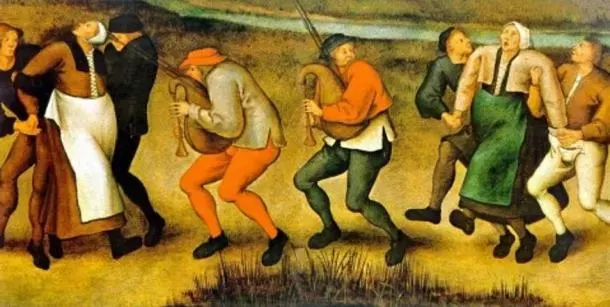
This isn't simulated illness — the symptoms are genuinely associated with the vaccination event, though not with the vaccine itself. It's a collective stress response, below the level of conscious control. These events are characterized by the sudden onset of physical symptoms resembling organic illness in a group of people, with no identifiable medical or toxicological cause, often in contexts of collective stress or perceived threat (Kfouri et al., 2023). The complication is that, in an age when technology carries images far beyond their local context, the phenomenon can take on much larger dimensions. This kind of reaction spreads through images and sounds, so social media and TV are relevant vectors for transmitting and spreading the symptoms. Shared photos and videos allow for verbal and visual contact and can act as triggers more broadly, expanding a local outbreak into a national crisis (Simas et al., 2018).
In Rio Branco's case, though, the diagnosis came late. And when it did, it found no clear path to reach the families. The narrative already in circulation — of a vaccine that made girls convulse — had videos, testimonials, and authority figures on its side. The counter-narrative had technical reports and press conferences. In contexts of low institutional trust and high circulation of misinformation, that's not an even fight.
It's impossible to say with certainty that this episode alone broke the population's trust in the vaccine. But Rio Branco is the only municipality in its state among the 121 listed as priorities in the Ministry of Health's National Catch-Up Strategy, and the timing matches the case's repercussions. As of 2025, 31,200 teenagers remain unvaccinated.
What exactly keeps this situation going? And what actually works to change it?
Vaccination isn't just a health issue — it's a behavioral one
Human papillomavirus causes more than 70% of cervical cancer cases — the fourth most common cancer among women in Brazil, and the leading cause of cancer death among women in the country's North region. The vaccine exists, is effective, and is available for free through the public health system. And yet, coverage still falls short of the WHO's 90% target.
That, on its own, says something. When a beneficial, accessible, free behavior doesn't happen, the answer is rarely a lack of information. It's in the architecture — cognitive, social, institutional — surrounding the decision.
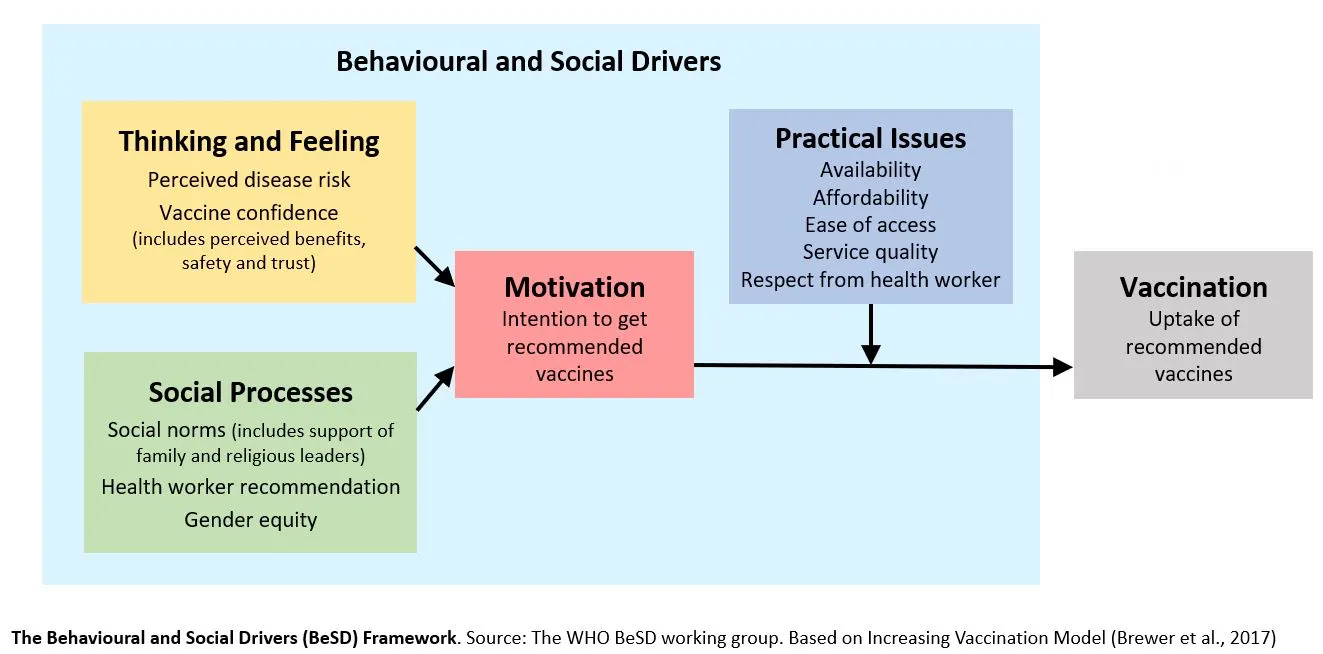
The BeSD framework (Behavioural and Social Drivers of Vaccination), developed by the WHO (2022), organizes the determinants of vaccination into three dimensions: thinking and feeling (what people believe and feel about the vaccine), social processes (norms, influence, recommendations), and practical issues (access, logistics, opportunity). The literature suggests that barriers in any of these dimensions, alone or combined, can prevent intention from turning into action.
What happens when a psychogenic outbreak isn't well managed
The Rio Branco episode wasn't unique. Similar cases have been documented in Japan, Denmark, Colombia, and other countries. Episodes like this are, with some frequency, associated with adolescent vaccination.
In Japan, coverage fell from over 70% to under 1% after the government suspended its active recommendation in 2013, following widely televised reports of neurological symptoms — even though the vaccine remained available on the schedule (Wilson et al., 2015). The recommendation was only reinstated in 2021. Models estimate more than 20,000 additional cervical cancer cases among the affected cohorts (Simms et al., 2020).
In Denmark, a 2015 documentary reporting alleged vaccine harms drove coverage down from 80–90% to 20–30% (Hansen et al., 2020). The institutional response came in the form of a national campaign stratified by audience, using personal stories from cancer survivors, social media, and community engagement — and coverage gradually recovered over the following years.
In Colombia, 15 teenagers were hospitalized after vaccination, the videos went viral, and coverage fell from 98% to 14% in four years (Simas et al., 2018). Authorities communicated through press conferences, without direct contact with families. The study found that the peak in hospitalizations coincided with the peak in media coverage and with visits from politicians and health officials to the affected towns.
The pattern is consistent: the social narrative built around the event matters more than the clinical event itself. And when that narrative takes hold without an adequate institutional response, it can persist.
How behavioral science can help increase vaccination coverage
The good news is that the literature on interventions to increase vaccination coverage is extensive. Here are the main recommendations:
Reminders work. A meta-analysis of 55 studies estimated a 28% increase in vaccination rates with mobile reminders (Jacobson-Vann et al., 2018). When these reminders incorporate behavioral economics principles — like anticipated regret, the endowment effect ("there's a vaccine reserved for your daughter"), or language that treats vaccination as the default — the effects are substantially larger. IDB experiments in Colombia, with more than 170,000 parents of teenagers, found increases of 29% to 63% depending on message framing. In Cali — a city with a history of these reactions, like Rio Branco — trust-building messages had the largest effect: a 55% increase in coverage compared to the control group, which received no messages at all (Diaz et al., 2025).
The role of the health professional. A health professional's recommendation is the strongest predictor of uptake compared to other interventions, with an odds ratio above 3 in a large meta-analysis (Malik et al., 2023). But that recommendation needs to be clear, consistent, and culturally sensitive. When the professional hesitates, families read it as evidence of risk.
Social media interventions can shape beliefs. Social media is an important driver of opinion about vaccines — in either direction. The effect depends critically on framing (Giannella et al., 2025; Llavona-Ortiz et al., 2022). Cancer survivor narratives, personal stories, and messages that speak to local values have far more traction than top-down technical communication.
School-based vaccination is irreplaceable. The initial rise in coverage in Brazil in 2014 was driven by the school-based strategy. Its discontinuation was followed by a decline. In low- and middle-income countries, when teachers are trained and engaged, community-based approaches can reach coverage above 90%.
Engaging local leaders and communities. A broad strategy for increasing coverage is engaging local leaders, including religious leaders, in campaigns (Banerjee et al., 2022). Because they already have strong existing connections, they act as powerful messengers.
Making access easier. Making it more convenient to get vaccinated — through strategies like shorter travel times, more vaccination sites, flexible hours, and a simpler process — is consistently associated with higher vaccination rates across contexts and populations. Travel time in particular is often the single most important factor, with reductions leading to substantial increases in vaccination intention, ranging from 11% to 23% across different countries and periods (Kong et al., 1982). Expanding the types of providers and vaccination sites — including pharmacies, mobile clinics, schools, and neighborhood posts — increases access and can raise coverage, especially among populations facing geographic or logistical barriers (Larson et al., 2025).
Building "cognitive antibodies." In an era of "infodemic" — declared by the UN in 2020, characterized by an overabundance of information, particularly false and misleading information — it becomes important to understand how to protect people susceptible to this kind of content on social media. The old wisdom that prevention beats cure applies here: simply trying to correct beliefs after exposure (debunking), while necessary, has limited effects. A preventive approach (prebunking, or inoculation) is more promising: exposing people to weakened versions of manipulation techniques before they encounter real misinformation, producing "cognitive antibodies" and reducing future susceptibility. Systematic literature reviews (Lewandowsky & Van Der Linden, 2021; Compton et al., 2021) and meta-analyses (Banas & Rains, 2010) show that this kind of preventive intervention increases people's ability to recognize manipulation, decreases belief in misinformation, and reduces intention to share it — with "booster doses" potentially helping sustain immunity over the long term.
Final thoughts
Responding to a history of these reactions requires both an individual clinical approach and a collective response. That includes psychoeducation, countering anti-vaccine narratives, training health teams, and operational care — such as vaccinating teenagers in private, comfortable settings without exposure to the group, reducing the chances of fainting and other episodes (Jornal da USP, 2020).
The WHO also recommends that every vaccination campaign include a structured response plan for these outbreaks, with trained spokespeople, pre-prepared messaging, and surveillance mechanisms — both for vaccination-related events and for patterns of misinformation spreading on social media.
The Rio Branco case (and so many others around the world) illustrates challenges inherent to the interaction of new technologies, health, and behavior. These examples show how beliefs, social narratives, and institutional failures combine to keep a health behavior below where it needs to be — even when the vaccine exists, is free, and is available.
Behavioral science has tools to understand and act on challenges related to increasing vaccination coverage. It's worth noting that barriers vary by context, and a diagnostic process is necessary to define solutions — which is the kind of work we do here at the Brazilian Institute of Behavioral Sciences.
References
Banerjee, P., Seth, R., Dhaliwal, B. K., Sullivan, A., Qiayum, Y., Thankachen, B., ... & Shet, A. (2022). Vaccine acceptance in rural India: Engaging faith leaders as vaccine ambassadors. Frontiers in Public Health, 10, 979424.
Banas, J. A., & Rains, S. A. (2010). A meta-analysis of research on inoculation theory. Communication Monographs, 77(3), 281–311.
Compton, J., Van Der Linden, S., Cook, J., & Basol, M. (2021). Inoculation theory in the post-truth era. Social and Personality Psychology Compass, 15(6), e12602.
Diaz, L., Martinez Villarreal, D., Marquez, K., & Scartascini, C. (2025). Combating vaccine hesitancy: The case of HPV vaccination. Social Science & Medicine, 381, 118081.
Giannella, L., Grelloni, C., Natalini, L., et al. (2025). The role of internet information on anti-HPV vaccines. Vaccines, 13(5), 445.
Hansen, P. R., Schmidtblaicher, M., & Brewer, N. T. (2020). Resilience of HPV vaccine uptake in Denmark: Decline and recovery. Vaccine, 38(7), 1842–1848.
Jacobson-Vann, J. C., Jacobson, R. M., Coyne-Beasley, T., Asafu-Adjei, J. K., & Szilagyi, P. G. (2018). Patient reminder and recall interventions to improve immunization rates. Cochrane Database of Systematic Reviews, 2018(1), CD003941.
Kfouri, R. A., Gallucci-Neto, J., Marchetti, R. L., Maranhão, A. G. K., Campos, J. S., & Cunha, J. (2023). Reações psicogênicas e vacinas: O que o pediatra precisa saber [White paper]. Sociedade Brasileira de Imunizações.
Larson, A., Shanmugam, P., Mitrovich, R., Vohra, D., Lansdale, A. J., & Eiden, A. L. (2025). Expanding vaccination provider types and administration sites can increase vaccination uptake. Human Vaccines & Immunotherapeutics, 21(1), 2463732.
Lewandowsky, S., & Van Der Linden, S. (2021). Countering misinformation and fake news through inoculation and prebunking. European Review of Social Psychology, 32(2), 348–384.
Llavona-Ortiz, J. Y., Spanos, K. E., Kraschnewski, J. L., D’Souza, G., Myrick, J. G., Sznajder, K. K., & Calo, W. A. (2022). Associations between HPV vaccine decisions and exposure to vaccine information on social media. Cancer Control, 29, 10732748221138404.
Malik, A. A., et al. (2023). Behavioral interventions for vaccination uptake: A systematic review and meta-analysis. Health Policy, 137, 104894.
Marchetti, R. L., et al. (2020). Immunization stress-related responses presenting as psychogenic non-epileptic seizures following HPV vaccination in Rio Branco, Brazil. Vaccine, 38(43), 6714–6720.
Simas, C., Munoz, N., Arregoces, L., & Larson, H. J. (2019). HPV vaccine confidence and cases of mass psychogenic illness following immunization in Carmen de Bolivar, Colombia. Human Vaccines & Immunotherapeutics, 15(1), 163–166.
Simms, K. T., Hanley, S. J., Smith, M. A., Keane, A., & Canfell, K. (2020). Impact of HPV vaccine hesitancy on cervical cancer in Japan: Modelling study. The Lancet Public Health, 5(4), e223–e234.
Wilson, R., Paterson, P., Chiu, J., Schulz, W., & Larson, H. (2015). HPV vaccination in Japan: Continuing debate and global impacts. CSIS Global Health Policy Center Report, 10–21.
World Health Organization. (2019). Immunization stress-related response: A manual for program managers and health professionals.
World Health Organization. (2022). Behavioural and social drivers of vaccination: Tools and practical guidance for achieving high uptake.
World Health Organization. (2023). Human papillomavirus (HPV) and cervical cancer.
Enjoyed this? Subscribe to Café Comportamental for weekly essays in Portuguese, or explore more in Resources.